
Cardiovascular Diseases
Understanding cardiac muscle and diseases of diastolic dysfunction
Some cardiovascular diseases, including Hypertrophic Cardiomyopathy and Heart Failure, cause diastolic dysfunction where the stiffened heart does not relax properly and therefore struggles to fill with blood, limiting its ability to work well. This impaired relaxation and filling reduce the volume of blood that the heart can pump out during systole (contraction), which means the body receives less oxygen-rich blood than it needs.
Learn more about these cardiovascular diseases
Hypertrophic Cardiomyopathy (HCM)
HCM is the most prevalent of the inherited cardiomyopathies. It is a lifelong, often progressive condition that is frequently underdiagnosed. Individuals with HCM experience common symptoms of breathlessness, irregular heartbeat, chest pain, tiredness, dizziness, or even fainting. These symptoms are caused by excessive contraction and thickening (hypertrophy) of the left ventricular wall of the heart. Over time, the thickened muscle becomes stiff, making it difficult for the heart to relax and fill with blood. This is known as “diastolic dysfunction.”
If you have these symptoms, see a doctor. They may review your heart health, family history, and suggest genetic testing. Living with HCM can be challenging, but early diagnosis and treatment can help.

Types of HCM
Obstructive HCM (oHCM)
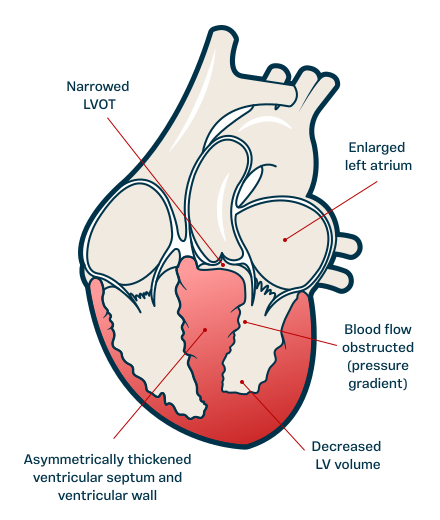
The thickened heart muscle, usually in the septum, blocks or narrows blood flow out of the heart at the left ventricle’s outflow tract.
Nonobstructive HCM (nHCM)
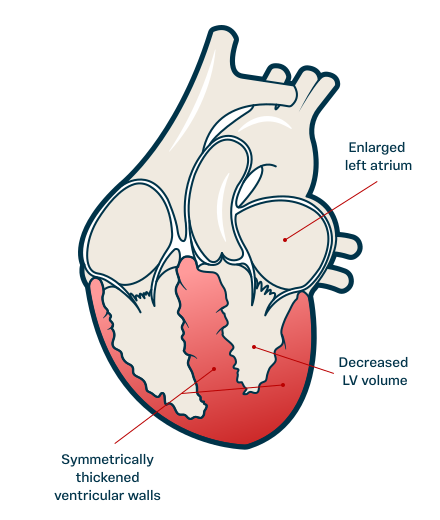
The heart muscle thickens and stiffens but does not block blood flow. The stiffness of the heart still affects how the heart functions.
About HCM
A severe, inherited heart disease
HCM is the most prevalent of the inherited cardiomyopathies. It is a lifelong, often progressive condition that is frequently underdiagnosed.
Characterized by diastolic dysfunction
Excessive thickening of the left ventricular wall leads to an reduced ability of the heart to fill with blood during each beat, which can cause symptoms like breathlessness, irregular heartbeat, chest pain, fatigue, dizziness, or even fainting.
Two important subtypes: nHCM & oHCM
Symmetrical wall thickening is seen in nonobstructive HCM (nHCM); obstructive HCM (oHCM) is characterized by asymmetrical wall thickening which causes the obstruction.
Learn More about HCM
HCM is a progressive genetic heart disease that affects how the heart contracts and relaxes, often leading to serious symptoms and complications. Watch this video to explore the underlying mechanisms of HCM, including the structural and functional changes that drive both obstructive and nonobstructive forms of the disease.
Heart Failure (HF)
Heart failure is a serious condition affecting over 60 million people worldwide. It is the top reason for hospital stays in people over 65. Heart failure happens when the heart muscle weakens or stiffens, making It harder for the heart to pump blood and deliver enough oxygen (or blood) to the body.
Symptoms of heart failure can include feeling very tired (fatigue), shortness of breath, swelling, and a general decease in activity.

Types of Heart Failure
Heart failure is divided into two main types based on ejection fraction, the percentage of blood pumped out with every beat:
Heart Failure with Reduced Ejection Fraction (HFrEF)
The heart muscle is weak and can’t pump enough blood out to the body.
Heart Failure with Preserved Ejection Fraction (HFpEF)
The heart muscle is stiff, making it hard for the heart to relax and fill with blood between beats.
About HFpEF
HFpEF accounts for nearly half of all heart failure cases in the US and is on the rise. Key risk factors include advanced age, high blood pressure, kidney dysfunction, and obesity. Hospitalization rates for HFpEF are high, with approximately 20-30% of patients readmitted within 30 days, and it is associated with significant morbidity and mortality, with 5-year mortality rates around 50-60%.
HFpEF can greatly impact daily life. Symptoms can range from mild to severe, may come and go, and often worsen over time. HFpEF occurs when the heart is stiff and struggles to fill with blood, limiting its ability to work well. This is also known as “diastolic dysfunction.” While medicines for HFpEF are available, they may not work for everyone. New medicines are needed for HFpEF and other heart diseases related to diastolic dysfunction.

About Heart Failure
A severe, prevalent heart disease
Heart failure is a serious condition affecting over 60 million people worldwide.
HFpEF accounts for nearly half of all HF cases in the US
HFpEF is characterized by a stiff heart muscle. Key risk factors include advanced age, high blood pressure, kidney dysfunction, and obesity.
Characterized by diastolic dysfunction
Excessive stiffening of the heart muscle leads to an reduced ability of the heart to fill with blood during each beat.